

Cultured Guru Logo
Cultured Guru Logo
  • Start Here
  • RecipesWe love to create delicious recipes with gut health in mind. By using our recipes, you can easily create any dish knowing that it’s good for gut health! Our recipe blog also includes Vegan Recipes, Vegetarian Recipes, Gluten Free Recipes, and Paleo Recipes.
  • About
  • Learn
  • Shop
  • Contact
  • Start Here
  • RecipesWe love to create delicious recipes with gut health in mind. By using our recipes, you can easily create any dish knowing that it’s good for gut health! Our recipe blog also includes Vegan Recipes, Vegetarian Recipes, Gluten Free Recipes, and Paleo Recipes.
  • About
  • Learn
  • Shop
  • Contact
Vinegar & Tonics

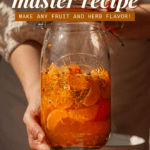
Fruit and Herb Shrub Vinegar Master Recipe

This is a master recipe for making shrub vinegar with fruits and herbs. I call this a master recipe because you can use it to create any flavor combination you would like! and I’ve included my favorite shrub vinegar flavors in the recipe notes.

Jump to Recipe Rate Recipe
Recipe Index | Ferment | Vinegar & Tonics

Fruit and Herb Shrub Vinegar Master Recipe

This is a master recipe for making shrub vinegar with fruits and herbs. I call this a master recipe because you can use it to create any flavor combination you would like! and I’ve included my favorite shrub vinegar flavors in the recipe notes.

“Master Recipe” = Use Any Combo of Fruit and Herbs You Want

I have a few “master recipes” on our website. The most popular is my Dutch Oven Sourdough Bread Recipe (Master Recipe). Basically, a master recipe is any recipe I share that you can customize! With this shrub vinegar master recipe, you can use any combination of fruit and herbs to create any flavor shrub you want to try. When you customize the recipe, just use the amounts listed. For herbs, use a total of 1/2 cup. If you want to use a mix of herbs, still use a half cup total.

Shrub vinegar ingredients on a table, including 2 cups of vinegar, 1 cup of granulated sugar, 2 cups of mandarin oranges, and 1/2 cup of mixed herbs (turmeric and calendula)

Pictured here in this blog is my go-to winter shrub combination: mandarins, calendula, and turmeric.

Other combos I love:

  • honeydew melon and basil
  • blackberry and thyme
  • rosemary, ginger, and grapefruit
  • pineapple jalapeno
  • cucumber basil
pouring 1 cup of organic granulated sugarnto a 1.5-liter clip top glass jar
pouring 2 cups of raw apple cider vinegar into a 1.5-liter clip top glass jar
stirring the vinegar and sugar together with a wooden spoon in a 1.5-liter clip top glass jar

Shrub Vinegar Main Ingredients

Apart from the fruit and herbs you choose, the other main ingredients in a shrub are organic cane sugar and vinegar. With shrubs, we are not fermenting vinegar; we are using already fermented vinegar to make a herbal, fruity, beneficial, and sweet drinking vinegar.

stirring fresh mandarin orange slices, calendula flowers, and turmeric into the vinegar and sugar mixture in the glass jar

Should You Use Fresh or Dried Herbs for Shrub Vinegar

I love using dried herbs. That’s because dried herbs are usually what I have on hand. I have a tea pantry stocked with quite a collection of dried medicinal herbs. So I like to pull from what I have when making shrubs and oxymel. I’ll use fresh for some though. Like for a melon and basil shrub, I think basil is best fresh.

For dried herbs, I source from Starwest Botanicals

after mulling in the fridge for a few days, someone is holding a strainer over a clean jar and straining the fruit and herb pieces from the shrub vinegar.

How To Drink Shrub Vinegar

While you can, I don’t recommend drinking it straight up, as it’s very acidic. It’s best enjoyed as a mixer. My go-to is drinking three tablespoons of shrub vinegar topped with sparkling water. Usually in a 12-ounce glass. You can mix it into some still water or apple juice, too. Any way you mix it, it’s a great apéritif (pre-meal digestive drink).

someone starting to making a serving of shrub vinegar by adding three tablespoons of shrub vinegar to a small drinking glass
topping the three tablespoons of shrub vinegar with store bought sparkling water.

The Medicinal Health Benefits of Shrub

Shrub is very beneficial for digestion and overall health! I can’t go around saying it will heal anything, because that’s not how it works. But it has many health benefits!

Drinking vinegar before meals helps with blood sugar levels by reducing the glycemic response to starchy foods, which can be beneficial for those with diabetes and heart disease. The acetic acid in vinegar also stimulates digestion, helps break down food, and can alleviate digestive issues (like gas).

The fruit and herb components of the shrub add vitamins, minerals, and antioxidants, which may help with inflammation and other various ailments, depending on the herbs/fruit you use.

Print
Vinegar & Tonics

5 Stars 4 Stars 3 Stars 2 Stars 1 Star

No reviews

Fruit and Herb Shrub Vinegar Master Recipe

This is a master recipe for making shrub vinegar with fruits and herbs. I call this a master recipe because you can use it to create any flavor combination you would like! and I’ve included my favorite shrub vinegar flavors in the recipe notes.

Ingredients

  • 2 cups any organic fresh fruit (berries, mandarins, peaches, pineapple etc. washed, peeled and sliced)
  • 2 cups vinegar of your choice (I like apple cider vinegar or kombucha vinegar)
  • 1 cup organic white cane sugar
  • 1/2 cup fresh or dried herbs (or a mix, rinse any fresh herbs you use)

Instructions

  1. Place fruit and herbs in a clean glass jar with a lid (this recipe should fit in a quart or larger).
  2. Combine the sugar and the vinegar.
  3. Pour the vinegar mix over the fruit and herbs. Stir to combine.
  4. Cover the fruit and vinegar mixture with a lid and store in the refrigerator for at least 2 days or up to 30 days. (The longer it sits, the more intense the fruit flavor.)
  5. When your shrub is ready, line a colander with cheese cloth and place over a bowl. Pour the shrub through to strain off all the solids.
  6. Compost/discard the leftover fruit and herb solids.
  7. Use the shrub as a base for mocktails and cocktails. I like put three tablespoons of shrub in a 12-ouce glass and top off with carbonated water. (this is great as an apéritif!)
  8. If you try this recipe and love it, please leave a 5-star review below.

Notes

  • the flavor pictured in this blog is mandarin, calendula, and turmeric.
  • when using citrus, I rinse and scrub the peels and throw in a few peel pieces too. Peels add bitterness, so add with caution.
  • yes, you can use honey or maple instead of sugar.
  • Other combos I love:
    • honeydew melon and basil
    • blackberry and thyme
    • rosemary, ginger and grapefruit
    • pineapple jalapeno
    • cucumber basil

Did you make this recipe?

Please leave a 5-star review below if you loved it! Tag @cultured.guru on Instagram


Nutrition information is auto-calculated and estimated as close as possible. We are not responsible for any errors. We have tested the recipe for accuracy, but your results may vary.

author avatar
Kaitlynn Fenley Author, Educator, Food Microbiologist
Kaitlynn is a food microbiologist and fermentation expert teaching people how to ferment foods and drinks at home.
See Full Bio
fermentation food microbiology sourdough sauerkraut fermenting at home fermented foods fermented drinks
social network icon social network icon social network icon social network icon

welcome!

hey i’m kaitlynn, i’m a microbiologist and together with my husband jon we are cultured guru.

more about us

let’s connect!

newest recipe

Sourdough Discard Seed Crackers (fermented 48 hours)
Sourdough Discard

Sourdough Discard Seed Crackers (fermented 48 hours)

never miss a thing

learn more about microbes from a microbiologist
Loading

on pinterest

Instant Pot Vegan Chicken Noodle Soup
Sourdough Smores Cookies
High Protein Cottage Cheese Mac and Cheese
Sourdough & Miso Chicolate Chip Cookies
Sourdough Dinner Rolls
Homemade Cottage Cheese

top rated recipes

How to Make Moroccan Preserved Lemons with Sea Salt
Fruits & Roots

How to Make Moroccan Preserved Lemons with Sea Salt

Slow Cooked Pork Roast with Sauerkraut Potatoes and Carrots
Protein

Slow Cooked Pork Roast with Sauerkraut Potatoes and Carrots

Sparkling Golden Beet Kvass Made the Traditional Way
Beverage Fermentation

Sparkling Golden Beet Kvass Made the Traditional Way

learn more

Understand microbes and master fermentation with our online courses!

learn

rate and review
We would love to hear what you think!
Cancel reply

Your email address will not be published. Required fields are marked *

Recipe rating 5 Stars 4 Stars 3 Stars 2 Stars 1 Star


you may also like

Top Rated Two jars of homemade fermented fruit vinegar with fresh apples in the background.
Vinegar & Tonics View Recipe

How to Make Vinegar from Scratch

Vinegar & Tonics View Recipe

How to Make Pineapple Vinegar from Pineapple Scraps

Vinegar & Tonics View Recipe

How to Make Kombucha Vinegar

join us on insta

@cultured.guru

I will not ever wild lacto ferment just beets agai I will not ever wild lacto ferment just beets again lol. Mixing with cabbage for beet sauerkraut is the best though! 

“Lacto fermented beets” was the first ferment I tried to make after learning sauerkraut in college. My best friend Sidney came over and we used these gorgeous beets from the farmers market, with 2.5% salt, and some spices. Well, it ended up tasting like beet moonshine and it was just… not good.

But it was a conduit for learning. Those beets were my first lesson in how different sugars and growth in the rhizosphere vs the phyllosphere influences fermentation. 

Cabbage and the cabbage microbiome offer a lot to balance out beets in fermentation, and I think mixing into a sauerkraut is the only way to go for lacto fermenting beets! 

Try googlin’ “beet and red cabbage sauerkraut” and you’ll see my recipe, I’m Cultured Guru.
Squash is the secret ingredient! My Roasted Butte Squash is the secret ingredient!

My Roasted Butternut Squash Hot Sauce recipe is free on my website! I didn’t cook this one, so yes it’s still probiotic.

When lactic acid bacteria ferment the starches in winter squash, they naturally convert them into emulsifying compounds called exopolysaccharides. So when we blend our hot sauce after fermentation, there’s no watery separation in the bottle. Roasting the squash with the garlic for the recipes also adds such good flavor! 

Definitely make sure it’s fully fermented and not bubbling anymore before you blend and bottle. Otherwise, it’ll carbonate in the cute little hot sauce bottles.

#hotsauce
Myth Busting: Yes, the SCOBY IS the pellicle! Plee Myth Busting: Yes, the SCOBY IS the pellicle! Pleeeease stop saying it’s not. 😌


Watch till the end, I show you how to grow one!


This is a little tidbit from what I teach in the Kombucha lesson in our Fermented Drinks Semester online course!

I also share this recipe FOR FREE just ✨GOOGLE✨ “cultured guru SCOBY” and you’ll see my full recipe with the perfect sugar to tea ratios for growing, feeding and maintaining a kombucha SCOBY.

#kombucha
And the knife stays in the box. GOOGLE “sourdoug And the knife stays in the box. 

GOOGLE “sourdough king cake” my recipe is the first one! 👑☂️💚✨

If you’re like me and prefer from scratch, homemade everything, you’ll definitely want to try this king cake for Mardi Gras! I used organic naturally dyed sprinkles and all that jazz too. 

If you just search “sourdough king cake” on google you’ll see my recipe, it’s usually the first one. 

My main tips for making this:
✨use a very active starter or throw in some instant yeast with your starter
✨make sure the dough is actually proofed before shaping it. If it’s cold in your house it will take longer. 
✨please follow directions! You can cold ferment the dough in the fridge after it doubles in size and BEFORE filling and shaping.

🎵Song is Casanova by Rebirth Brass Band
Fermentation is a gift from the microbes of this e Fermentation is a gift from the microbes of this earth.

When we had a food business, I could never shake the feeling that fermentation is not meant to be sold to you from a fluorescently lit grocery shelf in an endless cycle of waste. Fermentation is meant to be cultivated in your home, with your hands, with intention and love in a sustainable, grateful practice of reciprocity and nourishment. 

This is the story of how we got here. 

After so many lessons learned, our small fermentation business is now value aligned, peaceful, fulfilling, and happy.  It often seems like the gut feelings (the microbes within us) guided us in the right direction. To teach. 

You can learn for free on our blog, or you can enroll in our online courses (we extended our new year sale!) Either way, with me as your teacher, you’ll learn to adopt a holistic perspective on the microbial ecosystems that influence our food, lives, and the planet.
My favorite topic I teach in our online course is My favorite topic I teach in our online course is called Fermentation Variables. The whole lesson is centered around the fact that there are six main variables that influence the outcome of fermentation.

Here they are, in no particular order:

Sugar
Salt
Oxygen
Acidity
Temperature
Time

Temperature and time depend on each other most closely. 

that means, for all of our foods and drinks that ferment at room temp, things slow way down in the winter cold. 

The fermentation timeline is simply longer when it’s colder (and faster when it’s hotter). The microbes, kind of like us, make things happen slowly in the cold winter. 

I think this is yet another sign from nature that we’re supposed to rest and be gentle and gracious with deadlines, work, and not rush things this time of year. 

Let it be slow, it’ll still be great, it just takes a little more patience and time. 

If you’re looking to start fermentation as an analog hobby in the new year, our courses are 40% off right now! You can use code NEWYEARS at checkout. (Yes, you learn online, but it’s delicious, long form content + the skills are life long). What you learn empowers you to get off the computer/phone and go ferment some delicious foods and drinks. 

Touching cabbage and dough is just as good as “touching grass” lol 

Let me know if you have questions about our courses or just fermentation in general in the comments!

#fermentation
Flower Icon
LEARN ABOUT MICROBES FROM A MICROBIOLoGIST
Loading

recipes

  • Sourdough
  • Sauerkraut
  • Yogurt & Kefir
  • Pickles
  • Sweets & Snacks

more

  • Start Here
  • About
  • Learn
  • Shop
  • Contact

social

  • TikTokVisit Cultured Guru TikTok Account
  • InstagramCultured Guru Instagram Account
  • PinterestVisit Cultured Guru’s Pinterest Account
  • FacebookVisit Cultured Guru’s Facebook page
  • Privacy & Terms
Footer Logo
Footer tagline
copyright

©2026

Cultured Guru

.

website by saevil row + MTT. all rights reserved.