

Cultured Guru Logo
Cultured Guru Logo
  • Start Here
  • RecipesWe love to create delicious recipes with gut health in mind. By using our recipes, you can easily create any dish knowing that it’s good for gut health! Our recipe blog also includes Vegan Recipes, Vegetarian Recipes, Gluten Free Recipes, and Paleo Recipes.
  • About
  • Learn
  • Shop
  • Contact
  • Start Here
  • RecipesWe love to create delicious recipes with gut health in mind. By using our recipes, you can easily create any dish knowing that it’s good for gut health! Our recipe blog also includes Vegan Recipes, Vegetarian Recipes, Gluten Free Recipes, and Paleo Recipes.
  • About
  • Learn
  • Shop
  • Contact
Sourdough

High-Protein Greek Yogurt Bagels (13.6 Grams of Protein)

Make delicious sourdough Greek yogurt bagels in 4 hours! They’re high-protein, with 13.3 grams of protein per bagel. (Includes an optional overnight ferment).

Prep: 20 minutes
Cook: 30 minutes
Total: 50 minutes
Jump to Recipe Rate Recipe
Recipe Index | Ferment | Sourdough

High-Protein Greek Yogurt Bagels (13.6 Grams of Protein)

Make delicious sourdough Greek yogurt bagels in 4 hours! They’re high-protein, with 13.3 grams of protein per bagel. (Includes an optional overnight ferment).

Easy Greek Yogurt Bagels

These Greek yogurt bagels have 13.3 grams of protein per bagel! This recipe combines sourdough starter with the convenience of instant yeast, letting you whip up a batch of high-protein, chewy bagels in just 4 hours with minimal hands-on effort.

For those seeking an extra benefit of sourdough digestibility, there’s an optional overnight fermentation step in the fridge. The overnight fermentation enhances the bagels’ flavor and improves their digestibility.

A bowl of raw ingredients including greek yogurt, bread flower, salt, water and instant yeast.
Hands using a spurtle to mix the ingredients for yogurt bagels.
Hands mixing the ingredients of yogurt bagels into a shaggy dough ball.
Hands holding the formed shaggy dough ball.

The Best Greek Yogurt to Use for Bagels

It’s essential to use strained, thick yogurt in this recipe. If you use thinner yogurt, the texture will be off, and the bagels may not hold their rise. For these bagels, I recommend one of three Greek Yogurt options:

  • Homemade Greek Yogurt, strained
  • Siggi’s 0% Icelandic Skyr Yogurt
  • Whole Foods 365 Organic 0% Greek Yogurt
Hand kneading dough in a mixing bowl.
Homemade sourdough bagel dough being kneaded by hands in a mixing bowl.
hands holding a dough ball after stretching and folding the dough.

The Best Flour for Making Greek Yogurt Bagels

When making any kind of homemade bagels, using organic bread flour is a game-changer. Bread flour is designed explicitly for yeast-leavened baked goods. It has a higher gluten content than all-purpose flour. This elevated gluten level is crucial for developing the best bagel texture.

The robust gluten network formed by bread flour helps the bagels hold their shape during boiling and baking, ensuring they have a nice crust and tender, chewy interior. Additionally, choosing organic bread flour means you’re opting for a product free from synthetic pesticides and additives, which can contribute to a cleaner, more wholesome bagel. All in all, organic bread flour is an essential ingredient for homemade bagels. It’s also good to keep on hand for making sourdough pizza crust!

Hands using a bench scraper to separate the big dough ball into equal-sized portions.
Soft, elastic bread dough stretched with hands over a white ceramic bowl.
Close-up of hands stretching and folding small dough balls.
Hands forming dough into smooth dough balls.
Finished dough balls are placed in a baking sheet to be formed into bagels.

Greek Yogurt Bagels: Three ways to make this recipe with sourdough starter

  • Active, bubbly, peaking sourdough starter: The first option is to make Greek yogurt bagels with an active, bubbly, peaking sourdough starter. This is the best option for making these bagels without packaged yeast. I do this all the time, and it works great; I double (sometimes triple if it’s cold) the proofing times in the recipe card when using only an active starter.
  • Sourdough discard from the fridge: The second option for making these bagels without any packaged instant yeast is to use sourdough discard from the fridge. You’ll need to start the dough the night before you plan to bake. So, in step 4 in the recipe card below, you will leave the dough covered overnight for 8-12 hours, then the following day, continue with step 5. This should allow enough time for the starter to become active in the dough. This method isn’t always successful and depends on the individual starter, how long it’s been in the fridge, and how established it is. This method also tends to result in more sour flavors.
  • Sourdough Discard + Instant Yeast: This is the method the recipe is written with. It’s the easiest and quickest. Adding instant yeast with the sourdough starter gives you all the great flavors of classic sourdough but with the reliable results of packaged yeast. You can still get long-fermentation benefits by proofing the shaped bagels overnight in the fridge before cooking. (see next paragraph for details on long overnight proofing)

My best advice for getting the best results from this recipe is to use an active peaking starter or a combination of starter discard and instant yeast.

Hands shaping dough into bagels

Long Ferment Sourdough Yogurt Bagels Overnight

To long ferment these bagels overnight, you place them in the fridge after they’re shaped. Once in the fridge, you can leave them to long ferment for up to 72 hours. Then, continue with the recipe as written.

Delicious homemade bagel with a soft inside and crunchy crust.

How to Store Greek Yogurt Bagels

  • Cooling: Allow your Greek yogurt bagels to cool completely on a wire rack before storing them. This prevents condensation from forming, which can make them soggy.
  • Room Temperature: Store bagels at room temperature in an airtight container or resealable plastic bag for up to 4 days.
  • Freezing: To freeze bagels, wrap each bagel individually in parchment paper or aluminum foil. Then, place them in a freezer-safe plastic bag or an airtight container. This prevents freezer burn and helps maintain their quality. You can freeze bagels for up to 3 months.
  • Thawing: When you’re ready to eat them, you can thaw bagels at room temperature, or for a quicker option, toast them directly from the freezer. You can also defrost them in the microwave for a few seconds, then toast them to restore some of the crispy texture.
Print
Sourdough

5 Stars 4 Stars 3 Stars 2 Stars 1 Star

5 from 1 review

High-Protein Greek Yogurt Bagels (13.6 Grams of Protein)

Make delicious sourdough Greek yogurt bagels in 4 hours! They’re high-protein, with 13.3 grams of protein per bagel. (Includes an optional overnight ferment).

  • Prep: 20 minutes
  • Cook: 30 minutes
  • Total Time: 50 minutes

Ingredients

  • 720 grams bread flour (6 cups)
  • 120 grams sourdough starter discard (1 cup)
  • 1/2 teaspoon active/instant yeast*
  • 200 grams water (3/4 cups)
  • 455 grams thick Greek yogurt (2 cups)*
  • 10 grams sea salt (about 2 teaspoons)
  • 1 Tablespoon baking soda (for the water bath)
  • 1 Tablespoon honey or sugar (for the water bath)

Instructions

  1. Read the recipe notes on proofing time before starting.
  2. In a large bowl, combine the starter, instant yeast, flour, salt, yogurt, and water.
  3. Knead the ingredients together until a uniform, but shaggy dough ball forms.
  4. Cover the bowl with a plate or a damp towel and proof the dough for 1 hour at a warm temp.
  5. Stretch and fold the dough. wet your hands and stretch the dough up out of the bowl and fold it in on itself, do this a few times until the dough smooths out and has more tension. Scoop around the sides of the dough with your hands to form it into a nice, smooth ball. Cover and let the dough proof for 30 minutes at a warm temperature.
  6. Next, sprinkle some flour on the surface of your counter. Remove the dough from the bowl and place it on the floured surface. 
  7. Stretch the dough into a rectangle that’s a little bigger than a sheet of paper. Be gentle with the dough!! You don’t want to flatten it. Just lightly pull the sides until it’s a rectangle about the size of a sheet of paper.
  8. Divide the dough into 10 equal pieces (each piece should weigh about 160 grams).
  9. Line a baking sheet with parchment paper and sprinkle flour on top of the parchment paper.
  10. Grab a piece of dough, and fold it in, forming a small round dough ball. Place the dough ball on the floured parchment paper. Repeat for the other pieces.
  11. Lightly sprinkle the top of the dough balls with flour. Cover the dough balls with a towel and let them rise for about 30 more minutes until they puff up a good bit.
  12. Flour your hands and pick up a dough ball. Place it in your right hand. Using your thumb on the top of the dough ball and middle finger on the bottom, squeeze a hole through the center of the dough ball. Bring your index finger and ring finger through the hole in the dough to touch your thumb.
  13. Use your other hand to guide the donut-shaped dough through your right-hand palm and fingers that are held in a circular shape. This is how you create a bagel shape.
  14. Place the shaped bagels back on the floured parchment paper. (lightly sprinkle more flour if you need to)
  15. Let the shaped bagels rest for about 15 minutes until they’re nice and puffy, but don’t overproof.
  16. (optional) Place the bagel dough in the refrigerator for a final proof of 12 hours.
  17. Preheat your oven to 450° F.
  18. Gather your toppings and add them to small bowls for easy use.
  19. Bring a large pot of water to a boil. Add in the baking soda and the honey (or sugar).
  20. Using a slotted spoon, place each bagel in the boiling water for about a minute, flipping at 30 seconds.
  21. Remove the bagel from the water, place it back on the parchment paper.
  22. Brush the boiled bagels with egg white and sprinkle on the toppings.
  23. Repeat for the remaining bagels. Once they all have toppings, place the bagels in the oven.
  24. Bake for approximately 20 minutes* until golden brown. Rotate the bagels at 10 minutes for even baking.
  25. Remove and allow to cool for 30 minutes.

Notes

  • Yogurt in this recipe needs to be strained and very thick. I like to strain my homemade yogurt, or use Siggi’s brand 0% Skyr. The yogurt you choose may slightly alter the nutrition facts. 
  • You can replace up to 70 grams of flour with oat bran to make high-fiber bagels. 
  • I proof my dough in my air fryer that is also a bread proofer set to 98° F. The times in this recipe are for those conditions. If you are not using a proofer, and the conditions in your home are cooler, proofing times may take longer.
  • If you want to make this recipe without any packaged yeast, you can! Double the proofing times in the recipe directions and use bubbly, peaking, active starter.
  • Bake time may vary. I usually end up baking for 35 minutes total. You can check the bagels every 5 minutes to ensure you do not overcook them. 

Did you make this recipe?

Please leave a 5-star review below if you loved it! Tag @cultured.guru on Instagram


Nutrition information is auto-calculated and estimated as close as possible. We are not responsible for any errors. We have tested the recipe for accuracy, but your results may vary.

author avatar
Kaitlynn Fenley Author, Educator, Food Microbiologist
Kaitlynn is a food microbiologist and fermentation expert teaching people how to ferment foods and drinks at home.
See Full Bio
fermentation food microbiology sourdough sauerkraut fermenting at home fermented foods fermented drinks
social network icon social network icon social network icon social network icon

welcome!

hey i’m kaitlynn, i’m a microbiologist and together with my husband jon we are cultured guru.

more about us

let’s connect!

newest recipe

Fruit and Herb Shrub Vinegar Master Recipe
Vinegar & Tonics

Fruit and Herb Shrub Vinegar Master Recipe

never miss a thing

learn more about microbes from a microbiologist
Loading

on pinterest

Instant Pot Vegan Chicken Noodle Soup
Sourdough Smores Cookies
High Protein Cottage Cheese Mac and Cheese
Sourdough & Miso Chicolate Chip Cookies
Sourdough Dinner Rolls
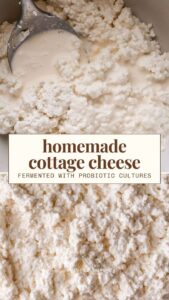
Homemade Cottage Cheese

top rated recipes

How to Make Moroccan Preserved Lemons with Sea Salt
Fruits & Roots

How to Make Moroccan Preserved Lemons with Sea Salt

Slow Cooked Pork Roast with Sauerkraut Potatoes and Carrots
Protein

Slow Cooked Pork Roast with Sauerkraut Potatoes and Carrots

Sparkling Golden Beet Kvass Made the Traditional Way
Beverage Fermentation

Sparkling Golden Beet Kvass Made the Traditional Way

learn more

Understand microbes and master fermentation with our online courses!

learn

rate and review
We would love to hear what you think!
Cancel reply

Your email address will not be published. Required fields are marked *

Recipe rating 5 Stars 4 Stars 3 Stars 2 Stars 1 Star


  1. Morgan
    01|17|2026

    Do I need to let the bagels come to room temp for an hour ish if the proof in the refrigerator overnight?

    Reply
    1. Kaitlynn Fenley
      01|17|2026

      you don’t have to! They can go straight to boil from the fridge. Make sure you’ve got a good boil going before dropping the in. They may sink at first, then should float right up to the top.

      Reply

you may also like

High Protein
Sourdough View Recipe

Sourdough Cottage Cheese Bagels (13.4 g Protein)

Sourdough View Recipe

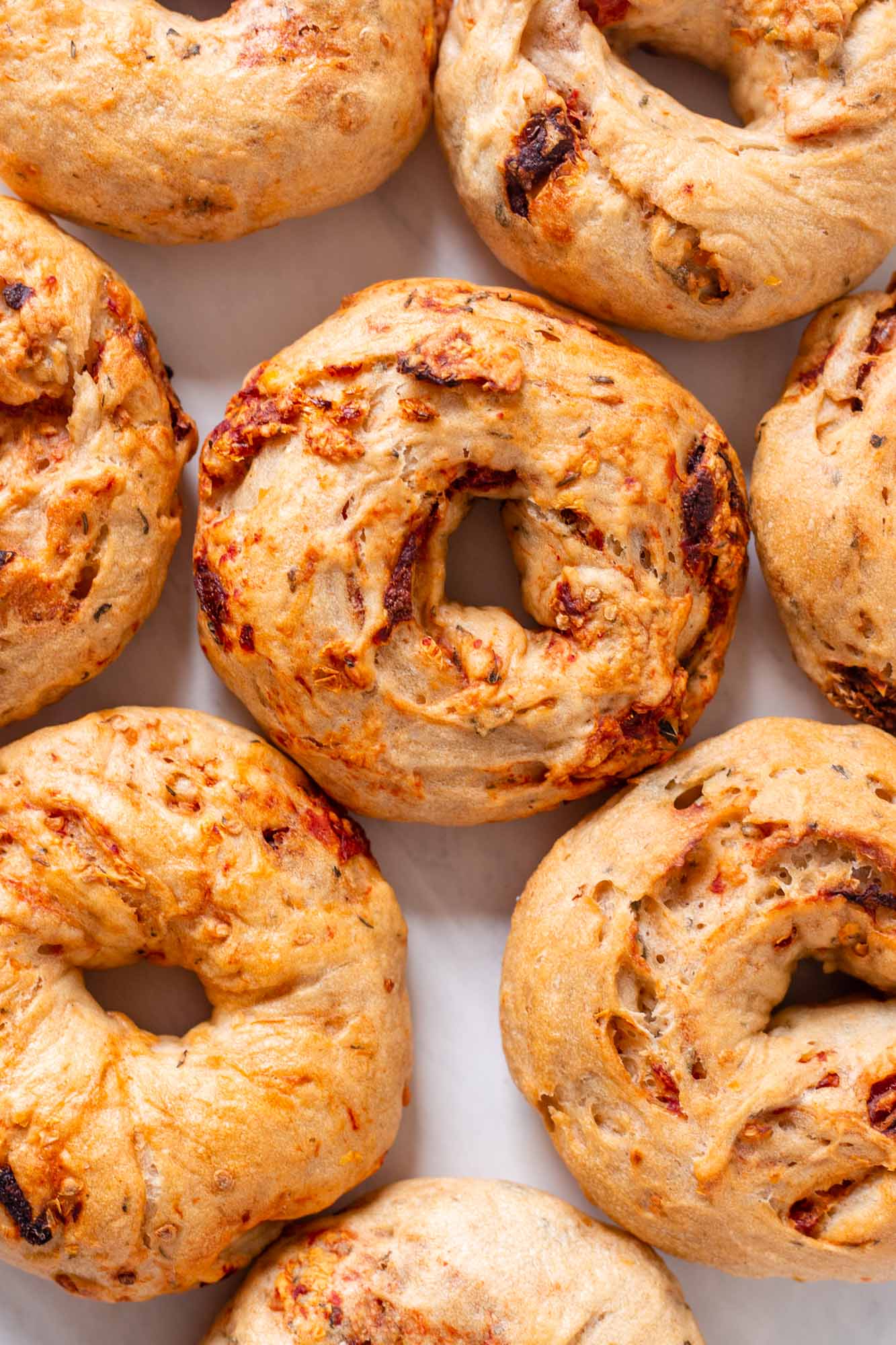
Sourdough Sun Dried Tomato Bagels with Herbs and Cheese

Sourdough View Recipe

How to Bake Vegan Parmesan Sourdough Bagels

join us on insta

@cultured.guru

A lot of people think vinegar kills all microbes b A lot of people think vinegar kills all microbes because shelf stable pickles do not contain microbes. But with shelf stable pickles, it’s the pasteurization/sterilization via hot water bath or pressure canning that makes shelf stable pickles free of microbes.

Hot hot hot acid in a pressurized environment does kill, well…most microbes. 

Think about “refrigerator pickle” recipes, though. They need to be stored in the refrigerator because vinegar alone doesn’t stop fermentation.

Fridge pickles are made without pasteurization/sterilization (canning) so they will wild ferment without refrigeration, and not necessarily in a good way because there’s not enough salt. 

All vinegar is made via fermentation too, and vinegar fermentation involves acetic acid bacteria, but also a ton of LAB, mainly Lactobacillus, Pediococcus, and Leuconostoc (the same genera you’d find in fermented veg.)  I linked a reference paper in my fermented mushroom recipe blog, so you all can read about the LAB involved in vinegar fermentation. 

Try 🍄‍🟫googlin’🍄‍🟫“fermented mushrooms” and you’ll see my recipe, it’s the first result (usually) 🤗

#mushrooms #fermentation
I will not ever wild lacto ferment just beets agai I will not ever wild lacto ferment just beets again lol. Mixing with cabbage for beet sauerkraut is the best though! 

“Lacto fermented beets” was the first ferment I tried to make after learning sauerkraut in college. My best friend Sidney came over and we used these gorgeous beets from the farmers market, with 2.5% salt, and some spices. Well, it ended up tasting like beet moonshine and it was just… not good.

But it was a conduit for learning. Those beets were my first lesson in how different sugars and growth in the rhizosphere vs the phyllosphere influences fermentation. 

Cabbage and the cabbage microbiome offer a lot to balance out beets in fermentation, and I think mixing into a sauerkraut is the only way to go for lacto fermenting beets! 

Try googlin’ “beet and red cabbage sauerkraut” and you’ll see my recipe, I’m Cultured Guru.
Squash is the secret ingredient! My Roasted Butte Squash is the secret ingredient!

My Roasted Butternut Squash Hot Sauce recipe is free on my website! I didn’t cook this one, so yes it’s still probiotic.

When lactic acid bacteria ferment the starches in winter squash, they naturally convert them into emulsifying compounds called exopolysaccharides. So when we blend our hot sauce after fermentation, there’s no watery separation in the bottle. Roasting the squash with the garlic for the recipes also adds such good flavor! 

Definitely make sure it’s fully fermented and not bubbling anymore before you blend and bottle. Otherwise, it’ll carbonate in the cute little hot sauce bottles.

#hotsauce
Myth Busting: Yes, the SCOBY IS the pellicle! Plee Myth Busting: Yes, the SCOBY IS the pellicle! Pleeeease stop saying it’s not. 😌


Watch till the end, I show you how to grow one!


This is a little tidbit from what I teach in the Kombucha lesson in our Fermented Drinks Semester online course!

I also share this recipe FOR FREE just ✨GOOGLE✨ “cultured guru SCOBY” and you’ll see my full recipe with the perfect sugar to tea ratios for growing, feeding and maintaining a kombucha SCOBY.

#kombucha
And the knife stays in the box. GOOGLE “sourdoug And the knife stays in the box. 

GOOGLE “sourdough king cake” my recipe is the first one! 👑☂️💚✨

If you’re like me and prefer from scratch, homemade everything, you’ll definitely want to try this king cake for Mardi Gras! I used organic naturally dyed sprinkles and all that jazz too. 

If you just search “sourdough king cake” on google you’ll see my recipe, it’s usually the first one. 

My main tips for making this:
✨use a very active starter or throw in some instant yeast with your starter
✨make sure the dough is actually proofed before shaping it. If it’s cold in your house it will take longer. 
✨please follow directions! You can cold ferment the dough in the fridge after it doubles in size and BEFORE filling and shaping.

🎵Song is Casanova by Rebirth Brass Band
Fermentation is a gift from the microbes of this e Fermentation is a gift from the microbes of this earth.

When we had a food business, I could never shake the feeling that fermentation is not meant to be sold to you from a fluorescently lit grocery shelf in an endless cycle of waste. Fermentation is meant to be cultivated in your home, with your hands, with intention and love in a sustainable, grateful practice of reciprocity and nourishment. 

This is the story of how we got here. 

After so many lessons learned, our small fermentation business is now value aligned, peaceful, fulfilling, and happy.  It often seems like the gut feelings (the microbes within us) guided us in the right direction. To teach. 

You can learn for free on our blog, or you can enroll in our online courses (we extended our new year sale!) Either way, with me as your teacher, you’ll learn to adopt a holistic perspective on the microbial ecosystems that influence our food, lives, and the planet.
Flower Icon
LEARN ABOUT MICROBES FROM A MICROBIOLoGIST
Loading

recipes

  • Sourdough
  • Sauerkraut
  • Yogurt & Kefir
  • Pickles
  • Sweets & Snacks

more

  • Start Here
  • About
  • Learn
  • Shop
  • Contact

social

  • TikTokVisit Cultured Guru TikTok Account
  • InstagramCultured Guru Instagram Account
  • PinterestVisit Cultured Guru’s Pinterest Account
  • FacebookVisit Cultured Guru’s Facebook page
  • Privacy & Terms
Footer Logo
Footer tagline
copyright

©2026

Cultured Guru

.

website by saevil row + MTT. all rights reserved.