


Jalapeno Sauerkraut
Jalapeno sauerkraut is particularly easy for a first fermentation project because cabbage ferments exceptionally well. So if this is your first time trying fermentation, welcome! You’re going to love this!
The water content and the microbial species richness of cabbage make it optimal for wild fermentation! You can easily get creative with sauerkraut by adding different flavors, as we did for this spicy jalapeno dill sauerkraut.
This is a sauekrraut recipe I’ve wanted to develop for a long time. When we ran our big fermented foods company, I wanted to try this recipe as one of our limited-edition sauerkraut offerings, so I wrote the recipe down in my notebook years ago. Alas, things change, and I’m happy to post the recipe here instead.

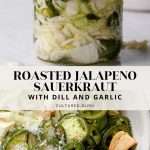
Roasted Jalapeno Sauerkraut with Dill and Garlic
I love to roast ingredients to incorporate into sauerkraut. Since the cabbage provides all the wild microbes for fermentation, we don’t have to worry about heat killing the microbes on the garlic and peppers.
When roasting ingredients for fermentation, we cannot use oil. I repeat, never use oil when roasting ingredients for fermentation.
I included instructions for dry roasting the jalapeno and garlic in the recipe card below. They will get a bit crispy and dehydrated, but that’s okay. The roasted ingredients add great flavor to the mix.
Also, feel free to increase the amount of jalapeno and garlic. Since they are dry-roasted, they will add little to no water to the mixture. If they aren’t adding water to the mixture, you don’t have to adjust the salt in the recipe.

Supplies You Need to Make Sauerkraut
Things You May Need:


Fermenting Jalapeno Sauerkraut
Sauerkraut naturally takes time. I recommend fermenting your sauerkraut for at least 14 days before eating, with 21-28 days being the best fermentation time for optimal flavor and health benefits.
By checking the progress of microbial stages under the microscope, we have provided you with a handy timeline below! If you follow our recipe and directions, your timeline of sauerkraut fermentation should approximately match ours!
Note that temperature will influence how fast or slow sauerkraut ferments. This timeline is applicable between 70-80° F. If you keep your home colder, the process is slower. If your home is warmer, it will be faster.

How should my sauerkraut look and smell while it ferments??
Temperature affects how quickly sauerkraut ferments. This timeline is applicable between 70-80°F. If your home is colder, the process will be slower. If your home is warmer, it will be faster.
- 24 – 48 hours: All contents in the jar should be submerged beneath the brine. The brine will be pretty clear, but will start to get a bit murky, and you’ll see little bubbles forming in between the cabbage pieces. There won’t be a ton of bubbles until about day 3, though. (This is stage one of fermentation, and there’s not much going on that you can see)
- 48 hours – 10 days: After 72 hours, you should start to see lots of bubbles. You need to burp the jar if you are using a rust-proof mason jar lid (as I recommend). Sauerkraut at this stage should change color from light green to pale olive. You will also notice the brine becomes very cloudy. Leuconostoc bacteria begin to thrive, producing lots of carbon dioxide, lactic acid, and acetic acid. You can open the jar whenever to ensure everything is submerged and the lid stays clean. If anything is floating to the surface, scoop it out with a clean spoon. If the lid looks dirty, wash it with hot, soapy water, then put it back on the jar.
- 10-21 days: Bubbles in the brine will decrease as the sauerkraut leaves stage two and enters stage three of fermentation. The brine will be quite cloudy and start to develop a pleasantly sour smell. You’ll probably start to see sediment at the bottom of the jar, and the bubbles will stop completely. Lactobacillus species are most abundant. Feel free to taste test and pop the jar in the fridge now if you like how it tastes. Or, let the sauerkraut ferment longer for a sourer, more complex flavor!
- 21 – 28 days: Lactobacillus makes up the majority or all of the microbial population now. They produce copious amounts of lactic acid, making the sauerkraut smell even more pleasantly sour. At this time, you can smell, taste, and refrigerate! The sauerkraut should have a pH of 4 or below and is now super probiotic and well preserved.
Jalapeno Dill Sauerkraut Care Instructions
During the first few days of fermentation: carbon dioxide and bubbles will be produced. Sometimes mason jars will become very full of liquid, and this liquid can seep out. You will need to burp the jar.
- When burping the jar, remove the lid and tamper everything back down using a clean tamper or spoon. Make sure everything, including the weight, is still submerged below the brine. You can also rinse off the lid daily to keep things clean.
Always Trust your sense of smell: In the beginning fermenting cabbage smells funky. When fermentation is finished, fermented cabbage should smell pleasantly sour and like strong cabbage. Never eat anything that smells repulsive or yeasty.
Never eat anything that has mold growing on it: By following directions, you should not encounter this problem.
After 3-4 weeks, remove the fermentation weight, smell, and taste test. Your fermented cabbage should smell pleasantly sour. It should taste tart, salty, and cabbage. Store it in the fridge.

More Sauerkraut Recipes to Try
- How to Make Old Fashioned Sauerkraut with Caraway Seeds
- Fermented Beet and Red Cabbage Sauerkraut
- Turmeric Napa Cabbage Sauerkraut
- Homemade Kimchi Inspired Spicy Sauerkraut Recipe
Roasted Jalapeno Sauerkraut with Dill and Garlic
Enjoy this spicy, salty, flavorful jalapeno sauerkraut made with roasted jalapenos, garlic, and dill. This jalapeno dill sauerkraut is long fermented for 21 days, giving it the best flavor and making it perfect for gut health.
- Prep: 10 minutes
- Ferment: 21 days
Ingredients
- 500 grams cabbage
- 18 grams unrefined sea salt
- 200 grams filtered water
- 100 grams jalapeno, slices
- 50 grams garlic
- 2 sprigs fresh dill
Instructions
- Chop the jalapeño and crush the garlic cloves.
- Line a baking sheet with parchment paper and preheat your oven to 450° F
- Dry roast (NO OIL) the jalapeño and garlic for about 20 minutes until lightly browned.
- Wash your fermentation equipment (jar, weight, and lid)
- Remove the outer leaves of your cabbage and lightly rinse with cool water. Using a knife, chop the cabbage to your desired thickness.
- Place your kitchen scale on the counter. Turn it on and set it to weigh in grams.
- Measure out all of your ingredients using your kitchen scale.
- Mix all the ingredients, including the water, in a large bowl. Lightly massage the cabbage and break up any large pieces.
- Pack it all, including the water, into a clean jar with a rust-proof lid. I suggest placing the dill sprigs in the bottom of the jar first, then packing everything else in. (a 32-ounce jar works best)
- Place a fermentation weight in the jar, making sure to submerge the cabbage pieces and weight fully into the liquid. If you don’t have quite enough liquid, place your glass fermentation weight in the jar and submerge as much as possible. Over the next 12 hours, the cabbage should release more liquid and you can press the fermentation weight down below the brine.
- Secure the lid (you do not need to tighten it all the way. Just secure the lid but leave it ever so slightly loose so the gas doesn’t build up too much). You can keep the jar in a glass dish to catch any spills.
- Burping the jar: It should get bubbly in the first few days. If you have a tightly secured lid, you will need to burp the jar. You should also wash off the lid to keep it clean and re-adjust the fermentation weight whenever needed. Anytime the weight comes up out of the brine, with clean hands press hard on the weight to tamper everything back down into the liquid.*
- Ferment at room temperature for 21-28 days, then remove the fermentation weight and refrigerate.
- If you try this recipe and love it, please leave a five-star review below!
Notes
- When things are bubbly: If it looks like you’ve lost brine and cannot re-submerge the contents by pressing down on the weight, top it off with raw apple cider vinegar. It slightly changes the flavor, but it doesn’t harm the sauerkraut’s microbes and prevents mold. You need to give it a good stir when it’s done fermenting to mix up the flavors.








Loved this recipe. This was my first time making sauerkraut and my gosh was this banger. I popped it in the fridge a week ago and it’s already halfway gone. I am currently making another batch. Highly highly recommend this one
Thank you for leaving a review!